Reading time: ~7 minutes • Updated for India 2025.
India’s “free premium AI” moment—and what it means for agencies
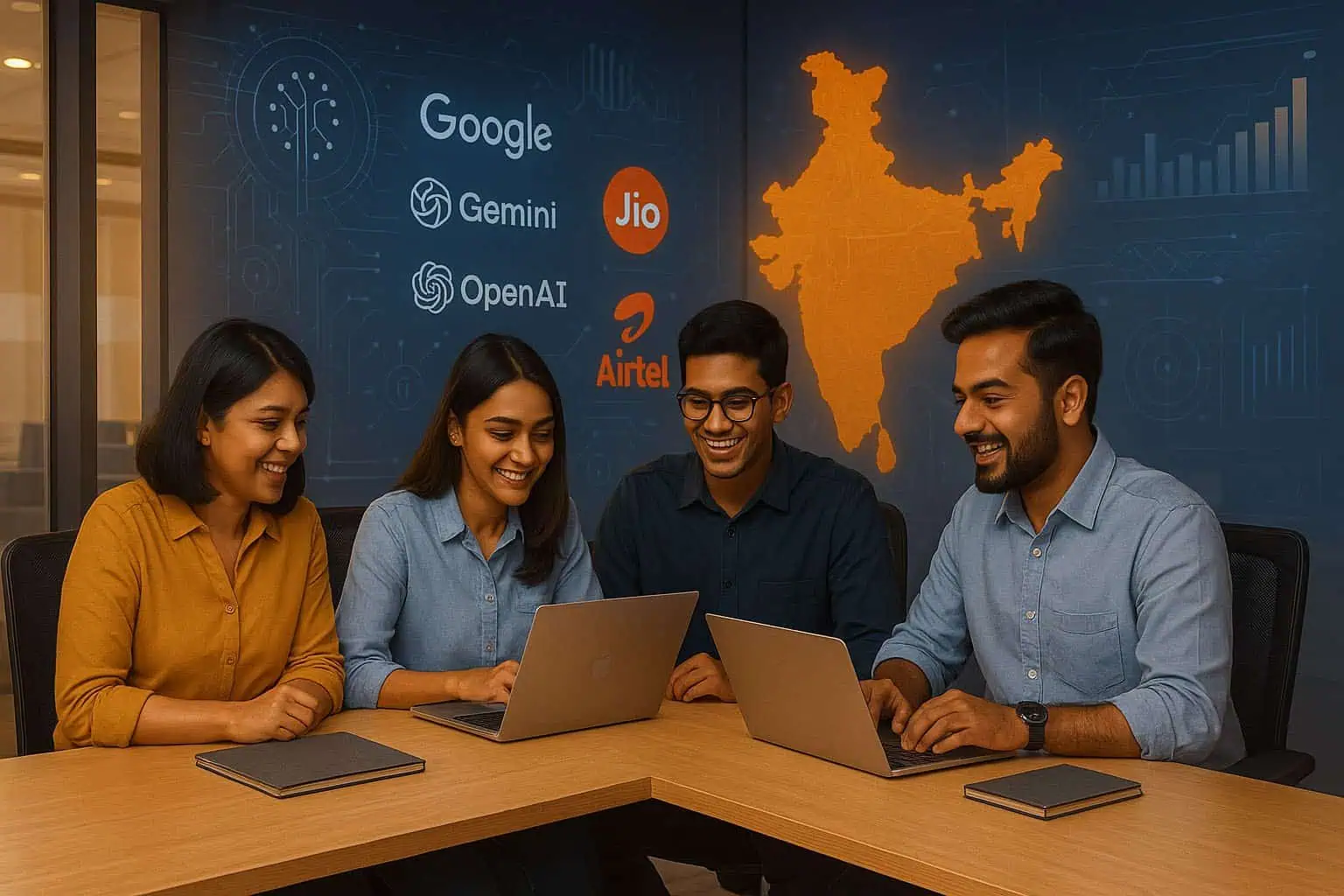
With global tech firms pushing free or heavily subsidised AI access in India, the baseline for marketing tech just shifted. The play is strategic: win usage and habit now, monetise later—at national scale. See coverage from BBC News, market commentary from Counterpoint Research, policy context in India’s MeitY and the Digital Personal Data Protection Act, 2023, and wider principles via the OECD AI Principles.
TL;DR for agency leaders
- Clients get powerful AI for “free”—expect faster, cheaper, and better.
- Your edge = domain expertise, brand governance, experimentation, measurement.
- Build AI-assisted workflows without hurting Core Web Vitals or trust.
Why this wave matters (now)
- Scale & mobile-first India: low data costs + huge youth demographic accelerates adoption.
- Rising expectations: AI drafting, image/video assists, search copilots—now baseline skills for in-house teams.
- Differentiation moves up-stack: strategy, narrative, localisation, compliance, testing.
Explore product directions from vendors: Google AI • OpenAI Blog • Perplexity.
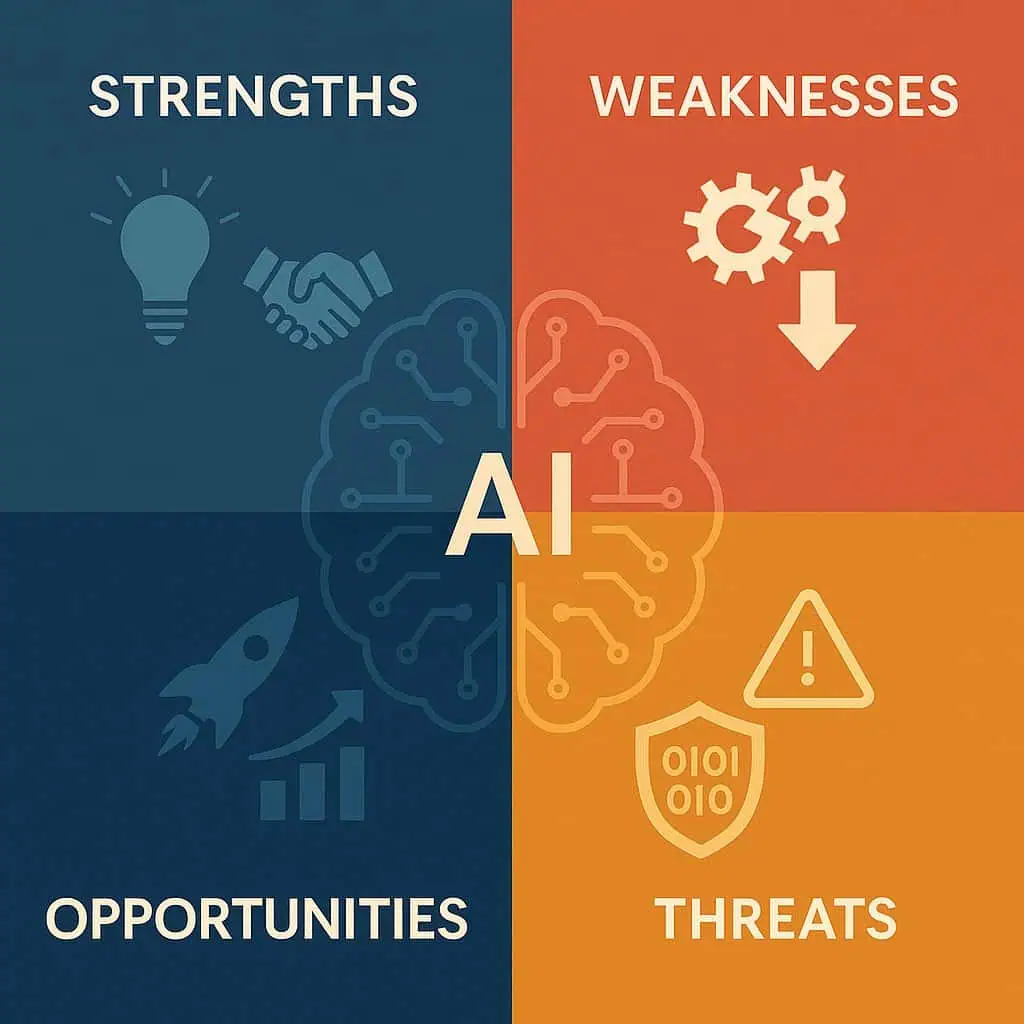
SWOT for Indian digital marketing agencies
Strengths
- Deep local/contextual insight and multilingual transcreation.
- Full-funnel integration: brand → content → activation → analytics.
- Human judgement and taste—hard to commoditise.
Weaknesses
- Routine deliverables become DIY with free AI (copy, basic creatives).
- Process debt (slow QA, manual ops) vs. AI-accelerated expectations.
- Margin pressure: “the tool is free—why pay the agency?”
Opportunities
- AI-assisted service tiers with clear SLAs and QA.
- Productised IP: prompt libraries, ad-angle matrices, industry playbooks.
- Measurement leadership: A/B/n, holdouts, MMM, incrementality.
Threats
- Disintermediation by in-house teams using bundled AI.
- Brand risk from hallucinations/off-tone outputs; agency still accountable.
- Vendor lock-in if you bet on a single AI provider.
Winning playbook: 30–90 days
0–30 days: Foundations
- Refresh your service matrix into AI-assisted vs human-crafted tiers.
- Stand up prompt & template libraries; version and review them.
- Guardrails: style guide, banned claims, fact-check protocol; add final human sign-off.
- DPDP-aware consent, retention and grievance info in SOWs (DPDP Act).
30–90 days: Scale & proof
- Launch 1–2 productised offers (e.g., “7-Day Landing Page Sprint: 20 AI variants + test plan”).
- Instrument everything: CTR, CVR, CPA/ROAS, LTV; publish lift not just outputs.
- Model diversity: keep a routing layer; compare outputs across providers.
- Creative ops: template systems to multiply assets while preserving brand integrity.
For model governance patterns, see OECD and Responsible AI principles.
Trust, compliance & YMYL guardrails
- Data minimisation: collect only what’s essential for the task; redact before model calls.
- Transparent notices: label AI-assisted assets; maintain an easy “erase my data” path.
- No medical/financial advice from AI alone: enforce expert review for YMYL niches.
- Logs & audits: keep prompt versions, source notes and performance snapshots.
Background: BBC reporting on India’s AI push • Counterpoint market insights.
KPIs to track
Loads → first interaction
Started → got recommendation
Experiments/month
CTR, CVR, CPA/ROAS, LTV deltas

Ready to modernise your agency with AI—without losing brand control?
Get a free AI readiness & workflow audit + a starter prompt library tailored to your vertical.
Book a discovery call