BusinessKrafts Essay Series
1) A Prediction Buried in Time
Around 2016, while teaching postgraduate students of the Humanities under Kolhan University, I designed an interdisciplinary course titled The Future of Digital Technology: Smartphones will be Intelligent-Phones. It was part of a broader effort to integrate ICT into the study of language and literature—an idea ahead of its time but grounded in our classrooms.
For four years, we explored digital literacy, mobile communication, linguistic computing, and early patterns of machine “understanding.” As the syllabus evolved, the ICT component was eventually removed due to a lack of adequate faculty members in the Faculty of Humanities with specialization in the ICT + Humanities interdisciplinary approach. The vision quietly receded—an idea waiting for its ecosystem to grow again.
2) From Light to Shadow — The Rise and Fall of HealthcareOffers.in
Parallel to teaching, I built HealthcareOffers.in—a city-wise health checkup platform in association with Thyrocare. The site grew on the strength of language, structure, and empathy for users. It ranked nationally and served people meaningfully. But in mid-May 2025, algorithmic shifts, increasingly guided by AI, altered the digital landscape. Rankings fell, visibility declined, and the system I had mastered no longer behaved like the system I had learned.
3) The Forgotten Course Finds Me Again
While auditing old notes, I found my 2016 line: “Smartphones will evolve into intelligent companions, capable of understanding speech, tone, and context.” The realization was immediate: the very force that had disrupted my site was the one I had predicted for my students. My failure became a bridge to rediscover my own foresight.
4) From SEO to Semantics
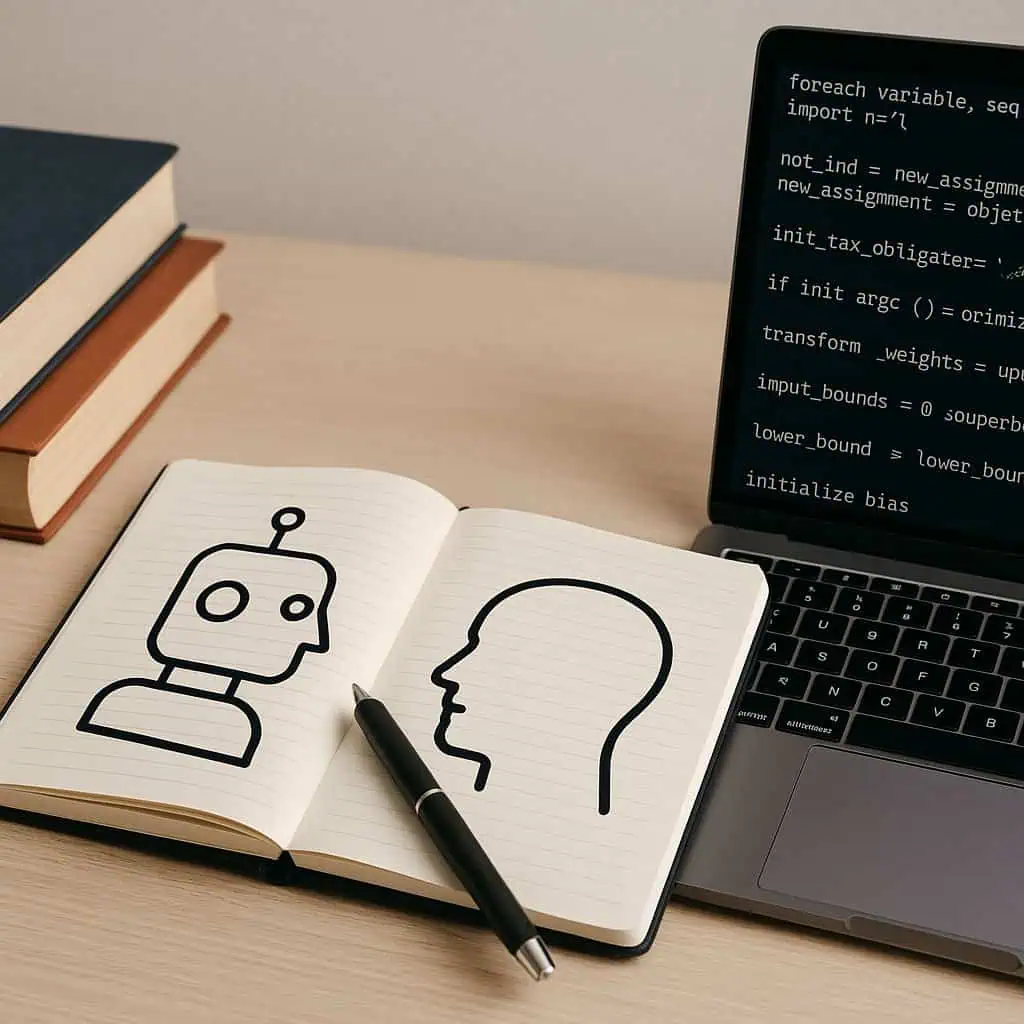
Traditional SEO prized keywords and structure; the new terrain prizes meaning. AI systems interpret intent, tone, and the pragmatics of language. As a linguist, this was familiar territory in a different form. Instead of fighting the change, I chose to treat AI as a new dialect of language—a system to be understood, engaged, and taught.
5) Bridging the Humanities and Artificial Intelligence
Through BusinessKrafts, my classroom widened. Every prompt became a miniature experiment in semantics. Every schema became a contract between human meaning and machine interpretation. In this sense, I never left teaching—I simply gained a new audience: algorithms that learn from human clarity.
6) Failure as the Teacher
Years ago I wrote, “Failure is life’s greatest teacher.” The 2025 setback taught me again: failure is not a wall; it is a portal between paradigms. Without that jolt, I might not have returned to the 2016 idea. Without the decline, I might not have discovered the vocation at the intersection of language and intelligence.
7) The Road Ahead — From Human Intelligence to Humane Intelligence
I now stand where language, culture, and analytics meet. The work ahead is to humanize AI and to let language refine technology—to show that systems can be both intelligent and humane. If 2016 was prediction and 2025 was awakening, the next decade must be contribution.
Epilogue
If I were to reintroduce that module today, I would not call it “The Future of Digital Technology.” I would call it The Human Side of Artificial Intelligence—because this journey was never solely about machines; it was about rediscovering the human heart that guides them.
© BusinessKrafts • Published 10 Nov 2025
An interesting and intelligible story based on self-experiences that honestly speaks about how the imaginations of the past are the reality of today. Your analysis of AI’s past and present is not only constructive but also creative.
Comments are closed.